
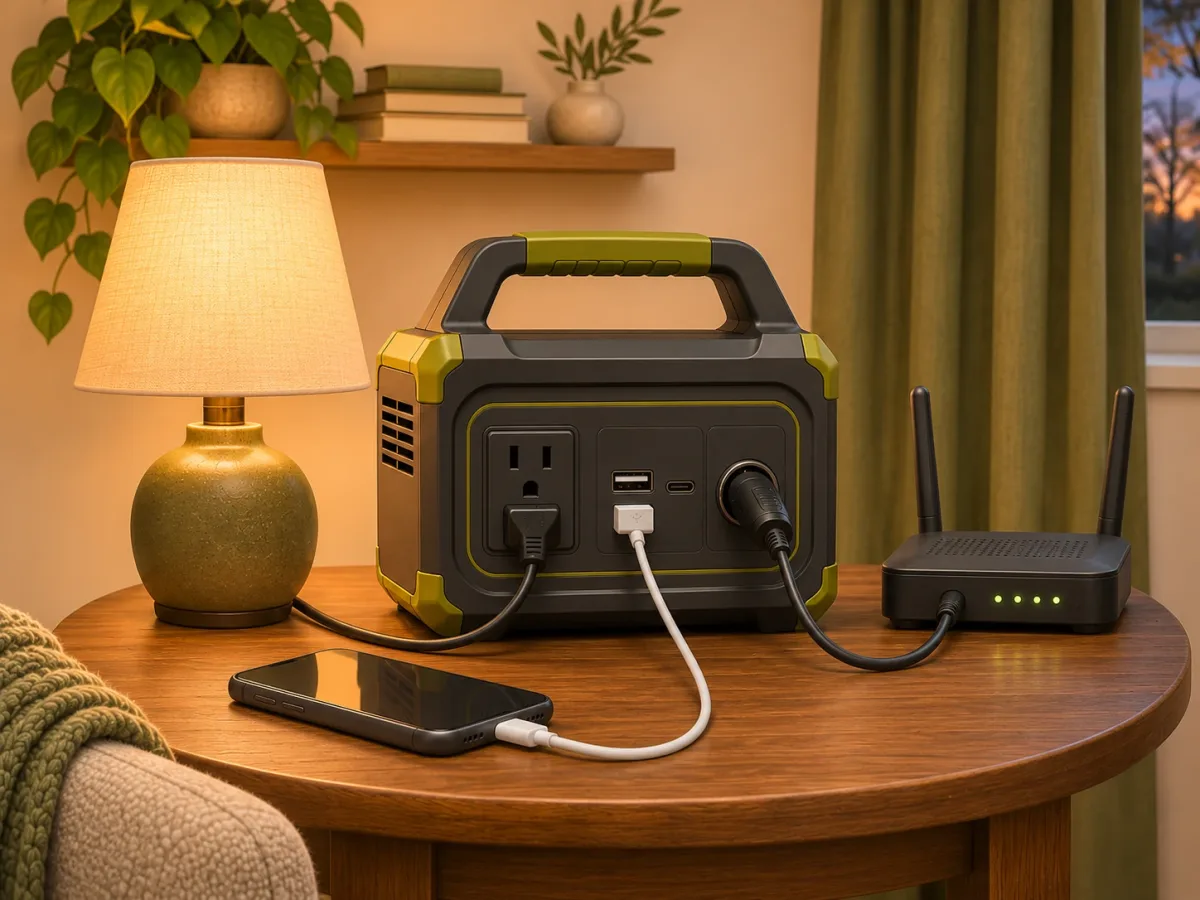
A phone, a lamp and the internet router: when the power goes out, the small things can make a big difference. If you are exploring portable backup power, start by deciding what you want to keep running and for how long.
Two numbers will help you ask better questions: watts and watt-hours. They describe different parts of the job.
Watts: What Can Run at the Same Time?
Watts, written as W, describe power. A station's continuous output rating helps you determine which devices it can support together. Add up the requirements of the devices you intend to use at the same time, and check the station's individual outlet limits as well.
Some equipment, including appliances with motors or compressors, needs extra power when starting. Check both the appliance's starting requirements and the station's supported surge capability. The plug fitting into an outlet does not establish compatibility.
Watt-Hours: How Much Energy Is Stored?
Watt-hours, written as Wh, describe energy. As a simple example, a device drawing a steady 100 watts for five hours uses 500 watt-hours of energy.
That calculation is a starting point, rather than a runtime promise. A station rated at 500 Wh will generally deliver less than five hours to that 100 W AC load because conversion losses, the station's own power use and operating conditions reduce the energy available to your device. Appliances that cycle on and off need a more detailed estimate.
Make a Short Backup-Power List
- List the devices you want to power, with their exact model numbers.
- Note their power requirements and any known starting surge.
- Decide which devices need to run together and your target operating time.
- Think about where and how you would recharge the station during an extended outage.
Check the manufacturer's instructions for charging, operating temperatures and supported connections. If solar charging interests you, the panel's voltage, current and connectors must also match the station's requirements.
Match the Equipment to the Job
A portable station powering devices plugged directly into it is a different setup from a system connected to your home's electrical circuits. Home integration requires compatible equipment and a qualified electrician. Never feed power into a household wall outlet.
Explore our EcoFlow range, then bring your device list to Battery Giant Rochester Hills. Our team can help compare options and confirm current availability for your application.
Visit 1178 Walton Boulevard in Rochester Hills, or call 248-759-4231. Let's talk about what you would like to keep powered up!